Yarra Valley Wine Facts Worth Knowing Before You Taste
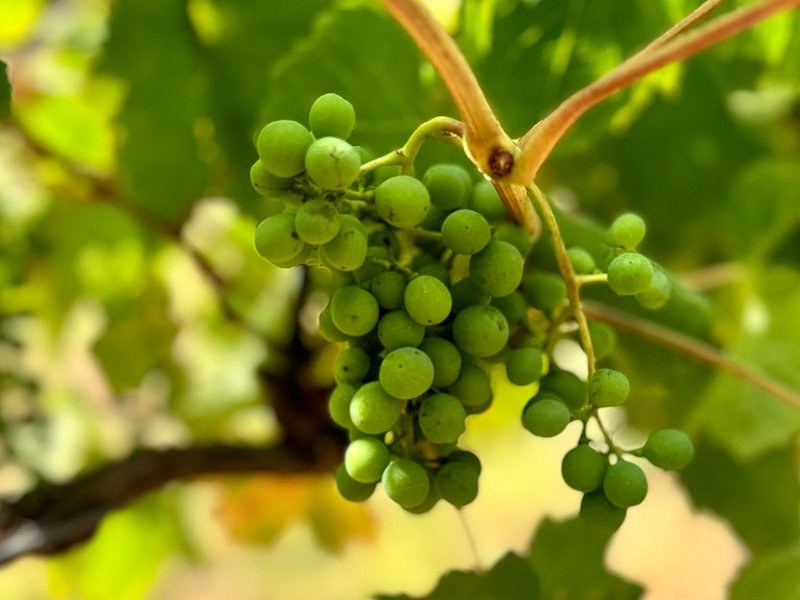
The short answer. Victoria's wine story starts here, in 1838. The valley is a cool-climate region best known for Chardonnay and Pinot Noir, and less than one hectare in a hundred of it is planted with vines. Knowing a few of these facts turns a row of glasses into a story your guide can build on.
You will taste faster than you can take notes on a wine day, so it helps to arrive knowing what makes this valley different from the next one over. These are the facts guides come back to. The Yarra Valley wine tasting tours bring most of them to life in a single afternoon.
Victoria's first vineyard was planted here in 1838
The Scottish-born Ryrie brothers planted Victoria's first vineyard at Yering Station in 1838, on land whose First Nations name was "Yering". That is why the region calls itself the birthplace of Victorian wine.
In 1850 Paul de Castella bought the property, and in 1859 he built the Old Winery. It still stands, and it is now the historic cellar door, open 10am to 5pm daily. You can taste there on the Chandon and kangaroo tour and on the wine, chocolate and gin tour.
Less than 1% of the valley grows grapes
Wine Australia puts the region at 3,130 km², with 2,837 hectares under vine. A square kilometre is 100 hectares, so the vines cover under one per cent of the land. The rest is towns, farms, forest and the ranges. It also explains why a tour spends time on the road: over eighty wineries are scattered across a large, mostly green valley.
The vineyards climb from 17 m to over 1,300 m
The region runs from 17 m above sea level on the valley floor to 1,338 m in the ranges. Soumah, whose vineyards sit 90 to 150 m above the valley floor, grows northern Italian varieties beside its Pinot Noir.
It is one of Victoria's coolest wine regions
Wine Australia records a mean January temperature of 18.9 °C for the region, one of the lowest of any Victorian wine region. That is a mean over day and night. At the Coldstream weather station, January afternoons average 28.2 °C and nights 12.1 °C. The region's own wine body names altitude and cool-to-cold nights among the things that shape its wine.
| Fact | Figure | Source |
|---|---|---|
| First vineyard in Victoria | 1838, Yering Station | Yering Station |
| Region size | 3,130 km² | Wine Australia |
| Area under vine | 2,837 ha | Wine Australia |
| Altitude | 17–1,338 m | Wine Australia |
| Mean January temperature | 18.9 °C | Wine Australia |
| Wineries | Over eighty | Wine Yarra Valley |
| Chandon founded | 1986 | Chandon Australia |
| Vintage | Mid-February to end of April | Visit Yarra Valley |
Four grapes do most of the work
Wine Australia names Pinot Noir, Chardonnay, Shiraz and Cabernet Sauvignon as the main varieties. Some of the fruit goes into sparkling wine. The regional wine body calls Yarra Valley Shiraz "Australia's best-kept secret", so ask for one if your tasting is all Pinot.
- Chardonnay and Pinot Noir are the valley's signature, and the base of its sparkling wine.
- Cabernet Sauvignon has a long history at St Hubert's in Coldstream.
- Nebbiolo, Brachetto and Marzemino grow at Soumah, a northern Italian accent in a cool valley.
- Tempranillo is among the wines at Tokar Estate.
One family has owned Yering Station since 1996
The estate where Victoria's wine began has had few owners for its age. Paul de Castella bought it in 1850, and the Rathbone family acquired it in 1996. When you taste in the Old Winery, you stand in a building from 1859 that is still pouring wine under a family's name more than 160 years later.
Sparkling wine has been made at Chandon since 1986
Chandon was founded in the Yarra Valley in 1986, on Wurundjeri Woi Wurrung Country. Its cellar door at 727 Maroondah Highway, Coldstream, opens 11am to 4:30pm daily. On the late-start tour you get a complimentary glass at a table with a view, and the private day includes a sparkling brunch there.
Vintage lasts about eight to twelve weeks
Grapes are picked from mid-February to the end of April, as a rule of thumb. The whites and sparkling base come in first, then Pinot Noir, then the bigger reds such as Shiraz and Cabernet Sauvignon. The weather that shapes it is on Yarra Valley weather.
February has the fewest rain days of the year
At the Coldstream weather station, February averages 4.3 days of rain and August 12.1, out of 101.5 across the year. Annual rainfall there is 754.8 mm. So the month with the fewest wet days is also the month vintage begins. July is the coolest month, with afternoons averaging 13.5 °C. Pack a warm layer if you taste in winter, and a hat and water in January, when Coldstream afternoons average 28.2 °C. The full year, month by month, is on Yarra Valley weather.
Californian redwoods grow at the far end of the valley
Near Warburton, Cement Creek Redwood Forest holds over 1,470 Californian redwoods, planted in the 1930s. Some are now taller than 55 m. It is an odd sight in a wine region, and the Redwoods tour walks you through it. More outdoor stops are on Yarra Valley activities.
The sweetest stop is free to enter
The Yarra Valley Chocolaterie & Ice Creamery in Yarra Glen charges nothing to walk in. It opens 9am to 5pm every day except Christmas Day. The shop holds over 200 chocolate, truffle and ice cream products made on site, so the non-drinkers in your group have plenty to choose from there. See things to do in the Yarra Valley for the other tasting stops without a glass.
The sanctuary has a longer name
Healesville Sanctuary is formally the Sir Colin Mackenzie Sanctuary. It is run by Zoos Victoria and open 365 days a year. Children aged 4 to 15 enter free at weekends and in holidays. The animals and trails are on Yarra Valley wildlife.
Where to taste these facts
The half-day winery tour pours at Soumah, so you can taste those Italian varieties. The wine, gin, whisky and chocolate tour visits St Hubert's cellar door. For which estate pours what, and when each is open, see Yarra Valley wineries, or read the Yarra Valley town by town.
Tours that pour the valley's history
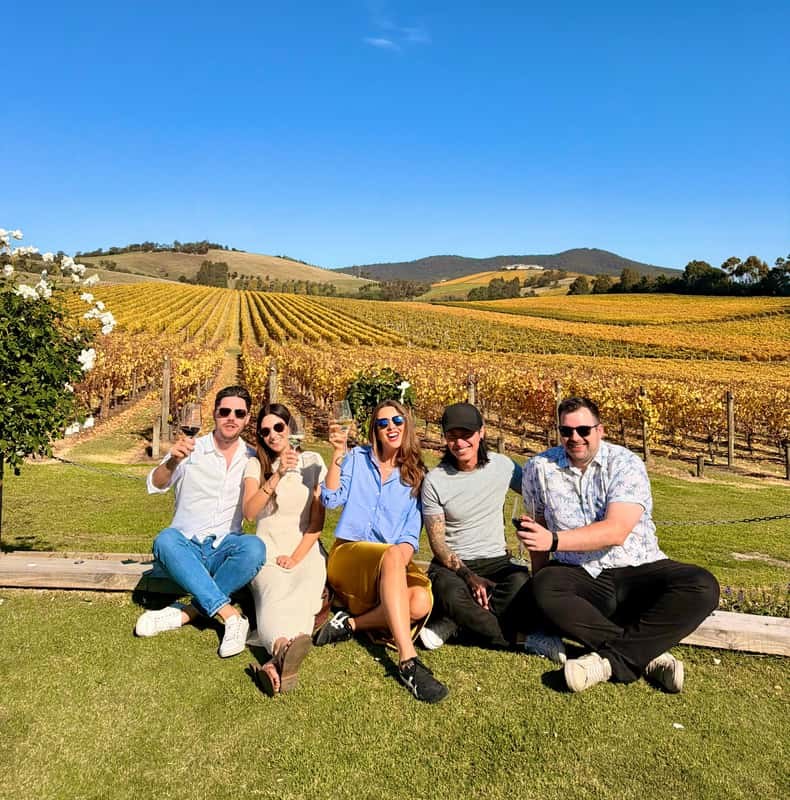
Melbourne: Yarra Valley Wine Tour + Choc, Gin & Good Times
Fruit at a farm gate, Yering Station and Yering Farm tastings and up to 12 chocolates, from the Arts Centre.
From $84 per person
Check Availability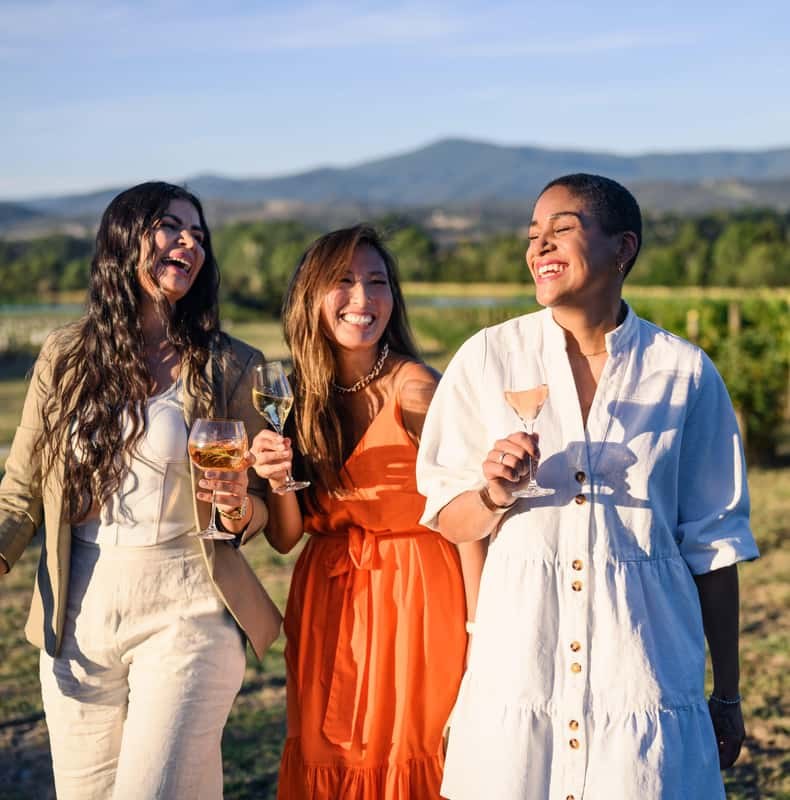
Yarra Valley: Wine, Chandon & Food Tour Inc Kangaroo Safari
An 11:30 start, sparkling wine at Chandon, cheese, Yering Station, chocolate and a dusk stop for kangaroos.
From $138 per person
Check Availability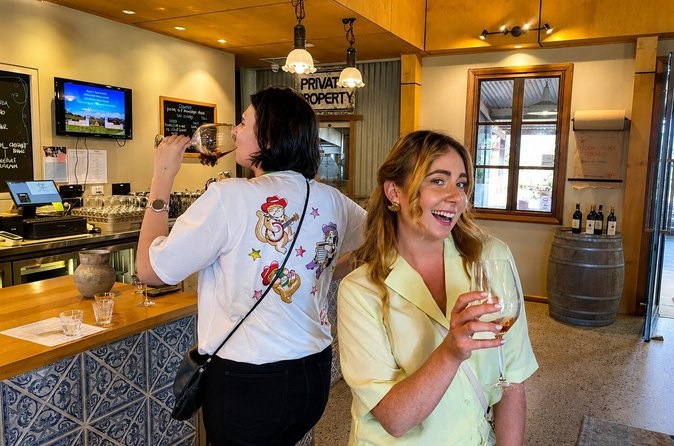
Yarra Valley Half-Day Winery Tour from Melbourne with Small Group
Three wineries in five hours, morning or afternoon, from Arts Centre Melbourne or Lilydale, for adults.
From $90 per person
Check AvailabilityNext: start where Victoria's wine began, then taste the grapes that made its name. Every fare sits side by side on Yarra Valley Tours.